$2.4 Billion Invested in Africa’s Energy Transition in November 2025
USD 2.4 billion invested and 11.8 GW of clean energy projects announced across Africa in November
Hey, David Oni here. This week’s newsletter is different. Instead of tracking headlines, we draw on two new EI reports; one on Africa’s November investment flows and another on project pipeline. Read the reports here.
November marked a defining month for Africa’s energy transition, with $2.4 billion deployed across clean power, grid infrastructure, and enabling reforms. But beyond the headline number, Electron Intelligence’s latest Projects Report and Investment Report reveal a more important shift: Africa’s transition is moving away from capacity accumulation and toward system design, investability, and delivery discipline.
We intentionally published two reports in parallel. Tracking projects without capital flows gives an incomplete picture. Following capital without understanding what is being built, and how, misses the system-level story. Reading the two together allows us to assess whether ambition is translating into execution.
What the investment data shows
November’s investment data confirms a shift in Africa’s clean energy transition from building generation toward making power systems investable. Deal activity was broad, but total volumes were driven by a small number of large tickets, reinforcing a barbell dynamic between mega-deals and smaller growth financings.
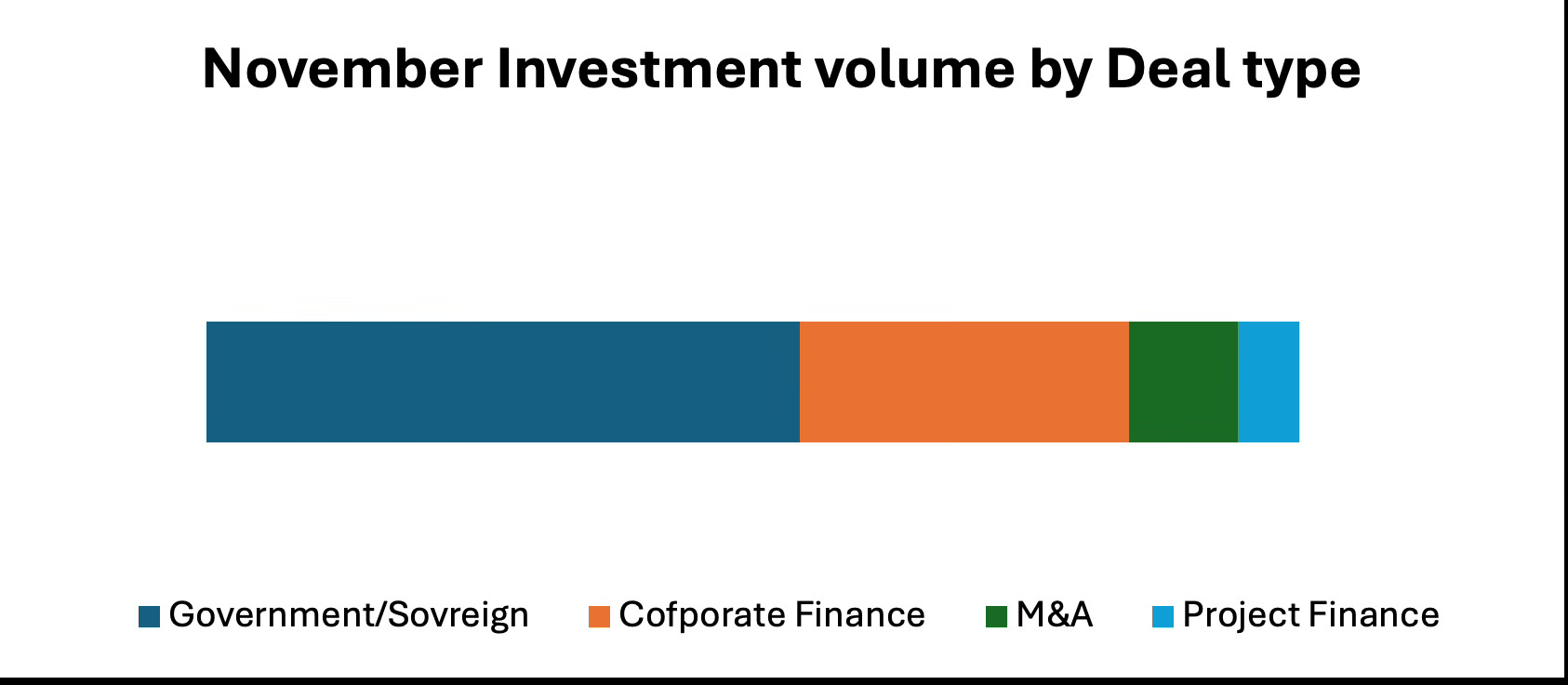
Capital overwhelmingly flowed into clean electricity, reflecting that reliable power and network capacity remain the binding constraints for industrial growth and electrification. The standout theme was the rise of “enablers.” Governance reform, utility turnaround, and bankability tools attracted outsized capital, signalling that tariffs, offtaker strength, credit enhancement, and regulatory readiness are now prerequisites for scaling private investment. Grid and network upgrades gained momentum as investors prioritised evacuation capacity and system stability.
Deal structures also evolved, with portfolio-level and blended finance frameworks increasingly favoured over single-asset project finance, pointing to a maturing market focused on scale, repeatability, and delivery.
What the project pipeline reveals
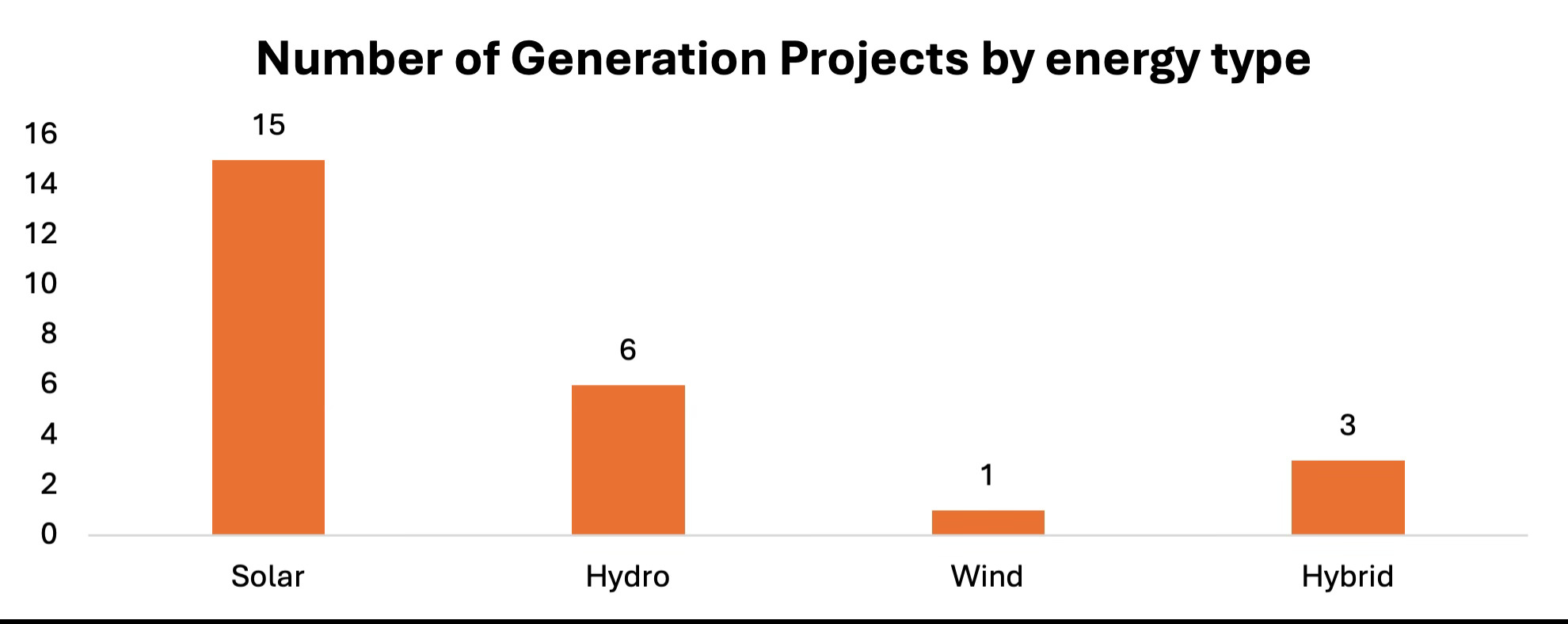
On the project side, solar remains the dominant entry technology across African power markets. Most new announcements were solar-led, often framed as hybrid or system-scale programmes. Wind activity was limited, both in number and scale, while transmission projects materially shaped headline capacity figures.
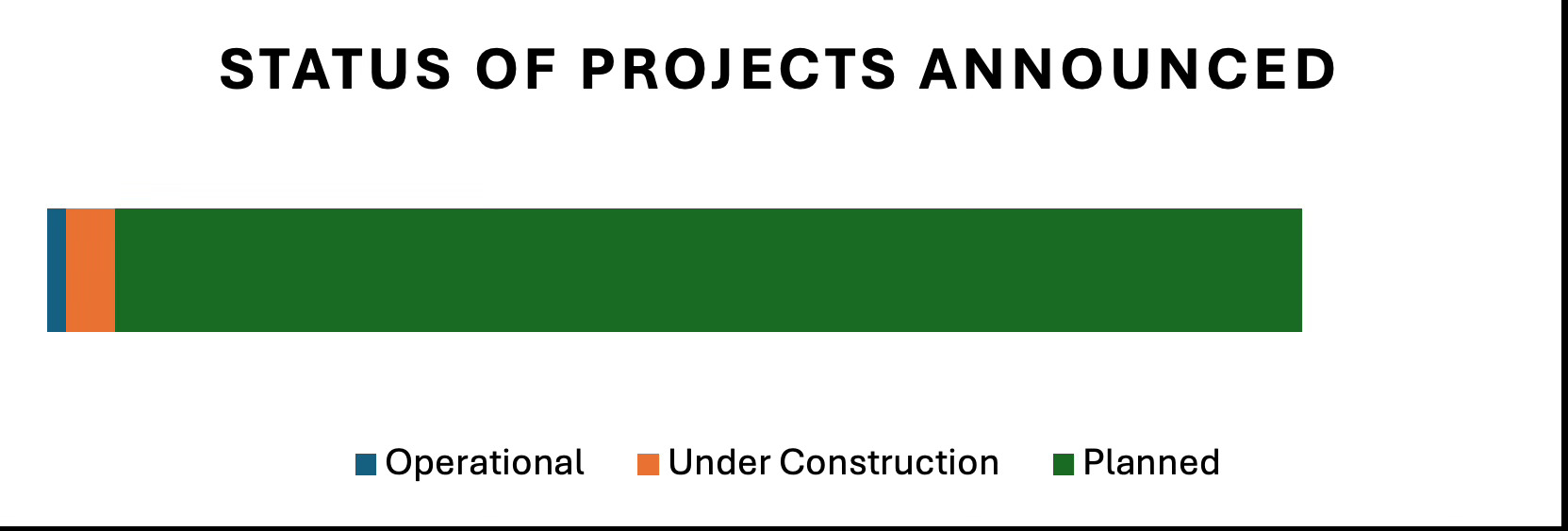
However, 95% of announced capacity remains pre-commissioning. Operational additions were modest relative to the scale of announcements, and delivery risk remains concentrated in early-stage pipelines. While grid expansion is becoming more visible, it continues to lag generation announcements, and evidence of grid-scale storage deployment alongside new generation remains limited.
Project delivery also remains geographically concentrated. Execution readiness continues to favour a narrow set of markets with stronger institutions and repeat developers. State utilities and public actors remain central, EPC participation is relatively concentrated, and offtake structures are still largely utility-led rather than merchant.
The implication is clear: Africa’s energy transition is increasingly constrained by grid and system readiness, not by generation ambition.
Why this matters and what to watch
Taken together, November’s data suggests the transition is entering a more disciplined phase. Capital is no longer chasing capacity in isolation. It is increasingly underwriting systems, sequencing, and institutional capability.
The key signal to watch in 2026 is whether large system-scale announcements progress toward construction. That progression will determine whether today’s momentum delivers durable capacity additions or remains trapped in early-stage pipelines.
For investors, developers, and policymakers alike, the message is consistent: the next phase of Africa’s energy transition will be won by those who can make power systems investable, not just expandable.