Africa’s US$3.56 Billion Private Transmission Pipeline Is Creating Different Entry Points for Capital
A small group of African governments is testing privately developed transmission projects as an additional way to finance electricity-network expansion. Uganda has taken one project to financial close, Kenya has signed a long-term transmission partnership, while South Africa and Angola are developing larger project pipelines. Together, these markets provide early evidence of how private participation in transmission is being structured across the continent.
The projects do not, however, offer investors the same entry point or risk exposure. A concession may give a developer the right to build, while a transmission-service agreement can establish how the investment will be repaid. Neither necessarily protects the project from payment delays, land constraints, termination or other risks outside the project company’s control. The investment opportunity therefore depends on how project rights, contracted revenue and risk protection develop together, and whether those arrangements can support development equity, construction finance and eventually longer-term infrastructure capital.
Executive Summary
- Project rights are advancing more widely than project financing. The reviewed pipeline represents approximately US$3.56 billion of reported investment. Four project packages have reached signed agreement or concession stage, but only the US$50 million Uganda Amari project has publicly confirmed financial close.
- A concession creates the right to develop an asset, but does not establish how invested capital will be recovered or protected. The financing gap narrows only when development support, contracted revenue and payment protection are added to those rights.
- Public and development-finance institutions are testing different ways to close that gap. British International Investment-backed sponsorship has carried one project through development to financial close. Kenya’s public tariff and payment chain creates an identifiable route for availability payments, while South Africa’s proposed guarantee vehicle is intended to protect payment and termination obligations across several projects.
- These mechanisms have not yet produced a repeatable private-transmission asset class. Only one reviewed project has reached confirmed financial close, and none has established the completed construction and sustained payment record needed to demonstrate that the structure can be repeated at scale.
Project awards are creating a pipeline with different levels of financial readiness
The projects reviewed represent approximately US$3.56 billion of reported investment, but only the US$50 million cost of Uganda’s Amari project is attached to publicly confirmed financial close. The remaining values describe projects at concession, procurement or development stages rather than capital already committed. The proposed Angola–DRC HYDRO-LINK interconnector has identified its route, sponsors and intended users, while Angola’s North and East transmission corridors have progressed into long-term concessions. Although these milestones make the projects more visible, publicly disclosed information does not yet establish how their revenue will be calculated, protected and financed.
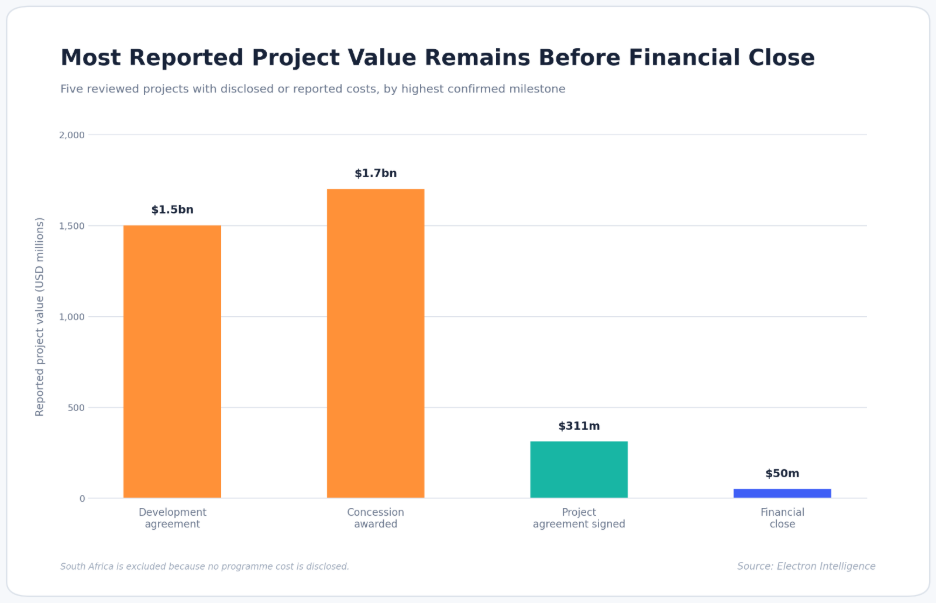
Figure 1: Most reported project value remains at development or concession stage.
South Africa is building a larger pipeline through its Independent Transmission Infrastructure Procurement Programme. Its transmission plan identifies a need for approximately 14,000 kilometres of new lines and associated infrastructure over ten years. Rather than opening the entire network to private investment, the programme will procure specified transmission packages from private project companies. Seven consortia have been prequalified for the first phase, but project-level contracts and financing will depend on the request for proposals and the commercial terms that follow.
Kenya and Uganda are further along this progression. Kenya has signed a long-term concession with an availability-based payment structure, while Uganda’s Amari project has reached financial close. These milestones make their routes to capital recovery more visible, although the two projects have not reached the same stage.
The announced pipeline consequently contains several distinct financing opportunities rather than one pool of construction-ready assets. Uganda’s Amari project has reached financial close under a transmission-services agreement, indicating that its financing parties accepted the project’s route to capital recovery, although the underlying payment terms are not public. Kenya has disclosed an availability-payment structure but has not confirmed financial close, while the recovery arrangements for the South African and Angolan projects remain subject to procurement or further contracting.
Revenue certainty depends on more than the electricity a line carries
Moving from a development award to committed financing requires a credible way to recover the capital invested. Unlike a power plant, a privately developed transmission asset does not necessarily earn revenue for each unit of electricity transported. Availability-based structures instead pay the project company for keeping the contracted asset ready for use. Because payment is linked to the line being available rather than to the volume of electricity transmitted, lower power flows do not automatically reduce project revenue. Revenue instead depends on the contracting institution making the agreed payment in full and on time, making its credit quality and the protection supporting its obligations central to capital recovery.
Kenya provides the most evidenced example of how a large investment is expected to be recovered. The US$311 million project will begin earning an availability-based tariff only after the assets have been completed and independently certified. The regulator will approve the project’s annual revenue requirement, which will be recovered through electricity tariffs. Kenya Power will remit the relevant funds to the Kenya Electricity Transmission Company Limited, which will then pay the project company. Revenue is therefore separated from the volume of electricity transported, but still remains dependent on collections and payments moving through several electricity-sector institutions.
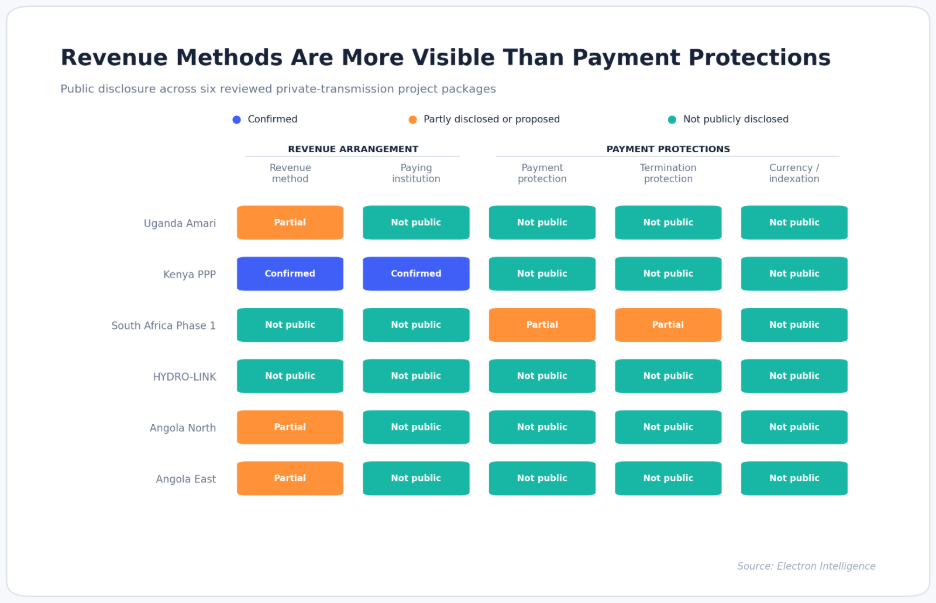
Figure 2: Revenue arrangements are more visible than the payment, termination and currency protections supporting them.
The published arrangements do not show whether project payments will receive priority over other sector obligations, whether a liquidity reserve will cover delayed remittances or whether another institution will support KETRACO if it cannot pay. South Africa’s proposed guarantee vehicle is intended to support payment and termination obligations across its transmission programme. This could add protection where an availability payment becomes a credit exposure, although the vehicle’s final coverage, funding and claim arrangements have not yet been disclosed.
Revenue visibility is lower elsewhere in the pipeline. Amari has reached financial close under a transmission-service agreement, but its payment formula and supporting credit protections are not publicly disclosed. The Angolan concessions establish development and operating rights without equivalent disclosure of how project revenue will be calculated, in which currency it will be paid or what will protect the payment obligation. The emerging structures therefore provide different levels of revenue certainty. Some define the service that will be purchased, while fewer disclose the complete payment chain supporting it. The strength of those cash flows will also depend on how land, construction, grid connection and termination risks are divided.
Private delivery obligations are clearer than protection against public-side risks
The emerging structures provide greater clarity over the risks private developers must carry than over the risks that remain with governments and transmission companies. Across the projects, private sponsors are being asked to finance, design, construct and, in some cases, operate the assets. This creates a recognisable basis for allocating construction and performance risk, but financing also depends on how the contracts treat events the project company cannot control.
Several disclosed protections address the private side of this divide. Kenya links payments to independently certified completion, requires performance securities and insurance, and gives lenders rights to intervene following project-company default. Uganda’s Amari project has appointed Siemens Energy as its engineering, procurement and construction contractor, while Angola’s concessions assign development, financing and operating obligations to private concessionaires. These arrangements allow investors to identify who is responsible when construction costs rise, completion is delayed or operating standards are missed, even where the detailed allocation between contractors and project companies remains confidential.
The treatment of publicly controlled risks is less visible. Land access, government approvals, connection to existing infrastructure and decisions by the system operator can delay completion without originating from the project company. Payment default and early termination can also interrupt revenue after the asset has been delivered. Public information on the Kenyan, Ugandan and Angolan projects does not fully establish the compensation, extensions or credit protection available when these events occur. This does not mean the underlying contracts omit those protections, but it limits how far investors outside the transactions can assess the remaining exposure.
Two approaches to closing this gap are beginning to emerge. Kenya and Uganda are allocating risks through individual project agreements, allowing each transaction to progress on its own commercial terms. South Africa is developing a programme-wide guarantee vehicle intended to support payment and termination obligations across several projects. The first approach has already supported financial close in Uganda; the second could create a more standard entry route across a larger pipeline if its final coverage and funding are established.
Private transmission is therefore developing both transaction-specific and programme-wide ways of protecting capital. How far each approach reduces risks outside the developer’s control will shape which investors can participate and at what stage of the project cycle.
The commercial opportunity sits between project development and mature operating assets
The projects reviewed provide evidence of active development capital and one confirmed financial close, but not yet of a wider market for commercial lending or operating-asset investment. The opportunity is developing through a sequence in which different investors assume different risks as projects move from preparation into construction and operation.
Early-stage capital currently funds project design, technical studies and contract negotiations before the final revenue and protection arrangements are complete. Specialist developers, development institutions and government-backed investment platforms are prominent at this stage because they can remain involved while project terms are being established. Their participation has moved proposed transmission assets into concessions, procurement programmes and signed agreements, creating a pipeline that later capital can assess.
The route for construction capital becomes clearer when those agreements separate risks the project company can manage from those controlled by public institutions. Availability payments, performance guarantees, insurance, lender step-in rights and termination protection are already appearing across the structures reviewed. Uganda’s Amari project has reached financial close, while Kenya has established many of these contractual elements without publicly confirming its financing. This provides evidence that financeable structures are emerging, but the absence of disclosed lenders and financing instruments prevents a conclusion that commercial banks or institutional investors have entered at scale.
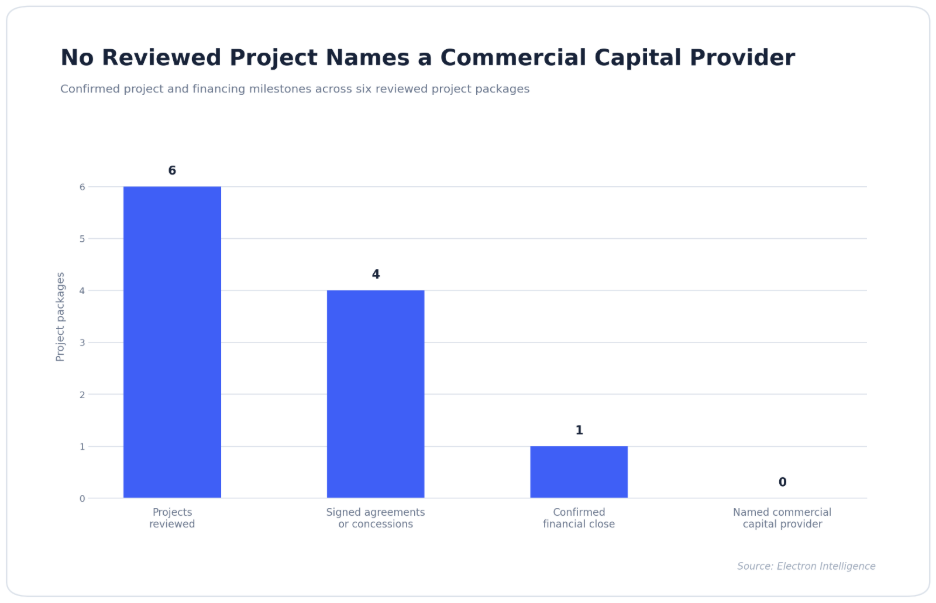
Figure 3: Four reviewed projects have agreements or concessions, but only one has reached financial close and none identifies a commercial capital provider.
Operating-asset investment remains a future opportunity. Once projects are completed, investors will be able to assess actual construction outcomes, asset availability, and payment performance. That record could support refinancing or changes in ownership by replacing part of the risk assumed during development with observable operating cash flows. None of the projects reviewed has yet reached this point.
Africa’s emerging private-transmission market is therefore accessible today mainly through development-stage participation and selected project financing. The structures being established could widen access to construction lenders and longer-term infrastructure investors, but the evidence of that transition will come from disclosed financing commitments, completed assets and sustained payments under the first transactions.
What We’re Watching
South Africa has prequalified seven consortia under the first phase of its Independent Transmission Infrastructure Procurement Programme, with the request for proposals scheduled for the second half of 2026. The bid documents will provide the clearest evidence of how the programme intends to convert specified transmission packages into financeable projects, including the revenue mechanism, paying institution, guarantee coverage and treatment of termination risk.
The other markets face project-specific milestones. Angola’s concessions must progress into disclosed revenue agreements and financing commitments, while Kenya’s signed concession must reach financial close. Construction progress and the eventual payment record of Uganda’s Amari project will provide evidence of how its financed structure performs beyond financial close.
These developments will distinguish an expanding project pipeline from a market that can repeatedly attract capital. Additional awards would create more development opportunities, but further financial closes, completed assets and sustained payments would demonstrate whether the commercial structures can support construction lenders and longer-term infrastructure investors.
Bottom Line
Africa does not yet have a repeatable private-transmission asset class. The projects reviewed instead show three public-side functions that can move transmission assets towards financing: absorbing early development risk, establishing a dependable route for recovering invested capital and protecting that payment obligation against default or termination.
These functions are beginning to appear, but they have not yet been combined consistently across the market. Only one reviewed project has reached confirmed financial close, and no project has established the construction, operating and payment record required to support repetition at scale. Private transmission therefore remains a series of individually structured transactions, but the emerging public-side credit architecture provides the clearest indication of how it could develop into an investable asset class.