Cross-Border Power in West Africa: What Bilateral Liquidity Risk Says About a Regional Market
West Africa is building the infrastructure for a shared electricity market. More than 4,000 kilometres of transmission lines now connect countries across the region, supported partly by about $1.6 billion in World Bank funding. Twelve countries have operated within one synchronized grid zone since 2023, while Nigeria tested its connection to that zone for four hours in November 2025.
But physical connection has not yet produced a large regional market. Cross-border trade accounts for about 7 - 8 % of West Africa’s electricity supply, and WAPP aims to raise that share to 10 percent by 2033. Most of this electricity is still sold through bilateral contracts rather than a shared trading platform.
Those contracts show why expanding trade requires stronger payment protection. The clearest public data comes from Nigeria’s electricity sales to Togo, Benin, and Niger. Over the five most recent quarters, these customers paid between 27 and 53 percent of the bills issued within each quarter. In four quarters over the past four years, NERC recorded no payment against that quarter’s invoice. Some of those bills were settled later as arrears, but the data still shows that payments often arrived after the electricity had been supplied.
West Africa has therefore made more progress in connecting its grids than in protecting payments. The Day-Ahead Market has credit rules but is not yet trading at scale, while the proposed regional revolving fund still lacks a final design. The question is whether these protections will be ready before substantially more electricity begins moving through the shared market.
Executive Summary
- West Africa is moving towards a shared electricity market, but physical integration is ahead of its payment protections. The Day-Ahead Market now has approved rules and tariffs but is not yet trading at scale.
- Nigeria’s bilateral sales to Togo, Benin and Niger provide the clearest public payment record. Current-quarter remittance deteriorated sharply from early 2023 to early 2024 before partially recovering. Annual remittance presents a stronger picture of overall collection, falling from approximately 96% in 2022 and 94% in 2023 to 75% in 2024, before recovering to 85% in 2025.
- Evidence elsewhere in West Africa points to similar settlement constraints. In 2020, the World Bank included cross-border arrears clearance in a six-country regional trade reform programme. In February 2025, the African Development Bank identified arrears from importing countries as a continuing constraint on Côte d’Ivoire’s power projects.
The region has built real infrastructure for a shared market
Several transmission projects now link countries that used to trade only in small amounts, if at all. The CLSG line connects Côte d'Ivoire, Liberia, Sierra Leone and Guinea. The OMVG loop links Guinea, Guinea-Bissau, The Gambia and Senegal. North Core is intended to connect Nigeria, Niger, Benin and Burkina Faso. The World Bank identifies all three as part of the regional integration buildout, while remaining transmission and operating constraints still limit a fully connected market.
The World Bank is also funding the market architecture: synchronization support, a regional grid code, transmission pricing, standardized commercial agreements and capacity at WAPP's Information and Coordination Center. WAPP is developing a Day-Ahead Market, which would match supply and demand for the following day through a regional platform.
The buildout includes more than power lines, and it remains unfinished. Buy one separate commercial question remains to be answered: once power crosses a border, does the buyer settle its invoice on time?
Nigeria's trade with Togo, Benin, and Niger shows a pattern of late and volatile settlement
Nigeria's regulator, NERC, publishes payment data every quarter for three trading partners: Togo, Benin, and Niger. This is bilateral trade, a direct, one buyer, one seller contract between Nigeria and each country. It happens outside the shared, pooled trading system that the region is still building.
Four years of this data show three distinct phases: relatively strong payment through 2022, a severe deterioration from early 2023 to early 2024, and a partial recovery afterward. The recovery has not produced consistent payment performance, with collection continuing to fluctuate sharply from quarter to quarter. For an investor, the problem is therefore not an absence of improvement, but the lack of evidence that one strong quarter signals a lasting change.
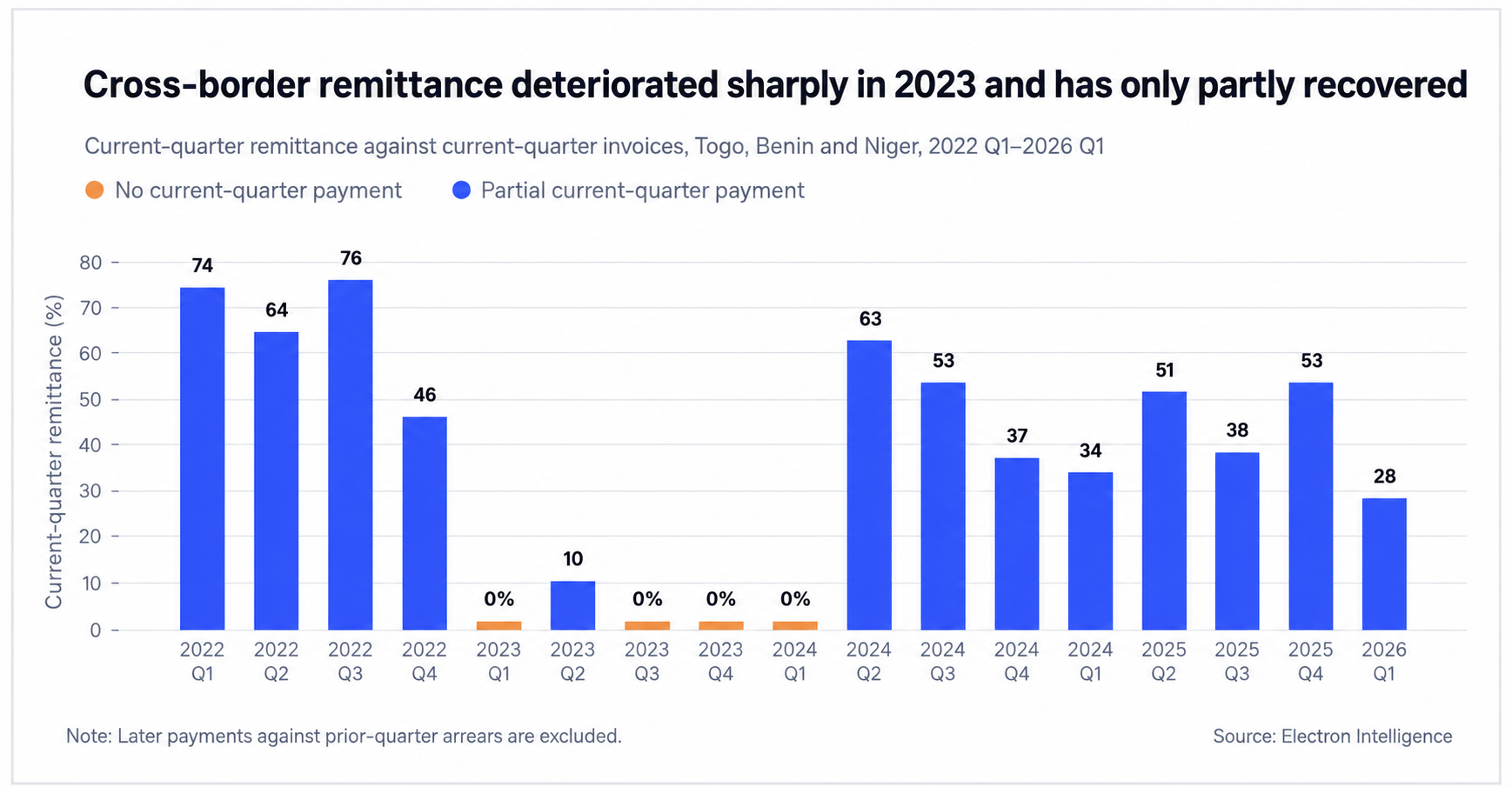
Figure 1: Current-quarter remittance fell sharply in 2023 before partially recovering.
Domestic bilateral customers provide the closest available benchmark. Like international customers, they buy electricity directly from generators rather than through a distribution company. In the five quarters with comparable data, domestic customers paid more reliably in four.
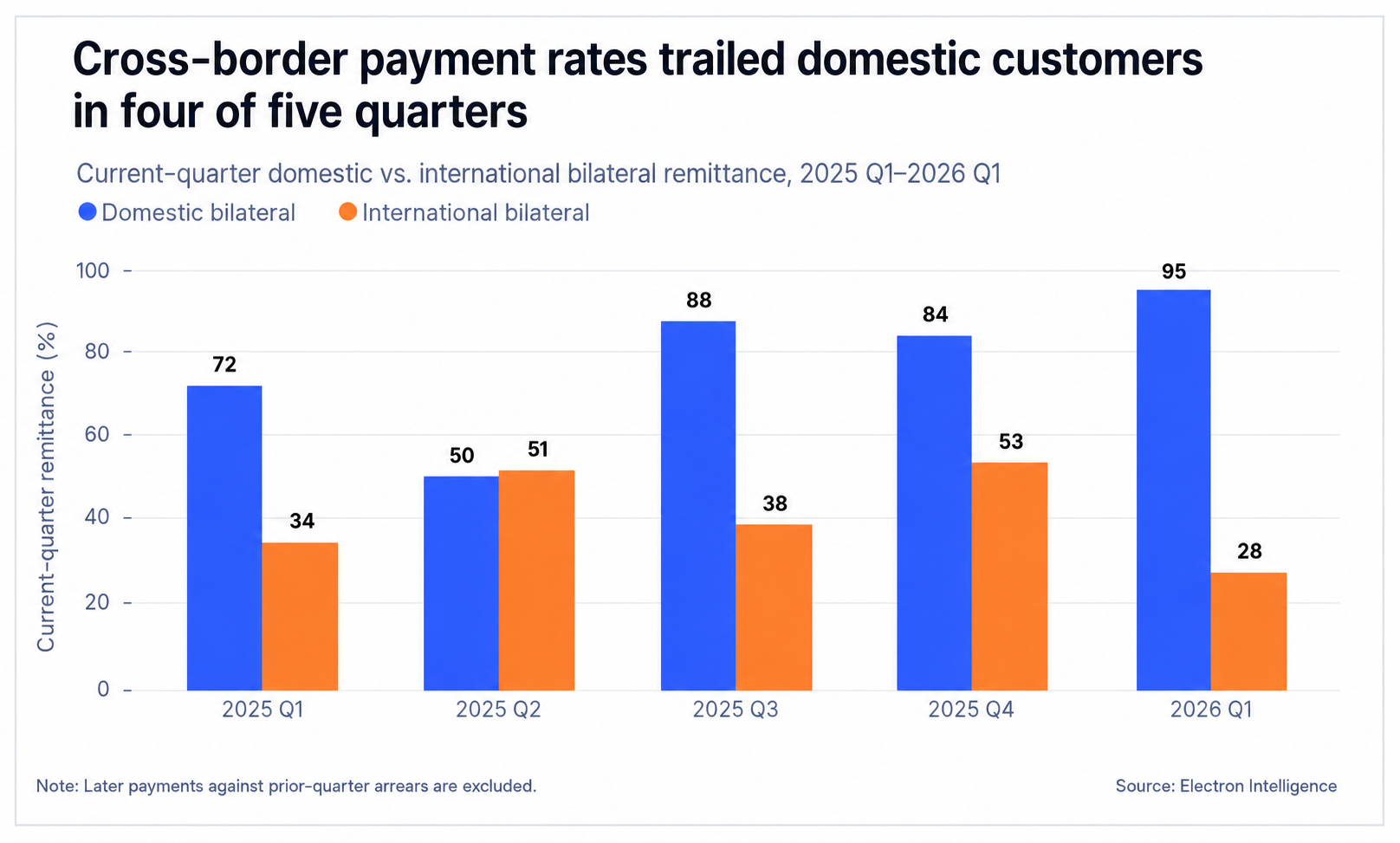
Figure 2: Cross-border remittance lagged domestic bilateral remittance.
The border may be only one part of that difference. Domestic customers are billed in naira, while international contracts carry exchange-rate exposure. The two groups may also operate under different payment windows, contract terms, security packages and reporting treatment. The available data cannot show which of these factors explains the payment gap, but it does show that international customers have been the less reliable counterparties.
Nigeria’s data cannot establish how every cross-border buyer in West Africa behaves. It does, however, show how payment delays can persist within established bilateral contracts. Evidence from a World Bank programme provides the next test: whether similar payment problems appear elsewhere in the region.
One World Bank program shows this same debt problem exists beyond Nigeria
In July 2020, the World Bank approved $300 million for energy-trade reforms in Burkina Faso, Côte d’Ivoire, Guinea, Liberia, Mali and Sierra Leone. The programme’s first pillar focused on strengthening confidence in cross-border commercial arrangements, including clearing existing arrears and improving payment-enforcement mechanisms. By making arrears clearance part of the reform programme, the World Bank treated unpaid cross-border electricity bills as a material constraint on regional trade.
The Bank’s 2020 appraisal document provides a historical example. Mali owed Côte d’Ivoire for electricity already supplied, and Côte d’Ivoire restricted further exports despite having the capacity to sell more. The document did not disclose the amount owed. It therefore shows that arrears affected an export decision at the time, but not the size of the debt or whether it was later settled.
This is different from the quarterly remittance data examined in Nigeria. A settlement delay occurs when an invoice is not fully paid within the quarter. It becomes an arrear if the balance remains unpaid after its due date. It becomes a credit loss only if the seller concludes that the debt cannot be recovered and writes it off. NERC’s data identifies delays within each quarter but does not show how much later became arrears or final losses.
The Mali example shows what can happen when unpaid obligations remain unresolved: they can reduce future trade before additional electricity is supplied. Under a bilateral contract, an exporter can respond by limiting sales to the specific buyer that owes it money.
The African Development Bank indicated that the concern had not disappeared from Côte d’Ivoire’s power sector. Its energy fact sheet, published on 10 February 2025, identified payment arrears from importing countries as a constraint hindering projects. However, it did not identify the countries involved, the amount outstanding or whether the arrears included Mali’s historical debt.
A pooled market could strengthen discipline through common collateral, credit limits and suspension rules. But individual exporters would no longer manage every transaction solely through direct negotiations with a chosen buyer. That raises the question the regional market must answer: what shared mechanism protects sellers when a participant pays late and the market’s first-line credit controls are insufficient?
The pooled market has credit rules, but its wider payment backstop remains unfinished
WAPP's response to payment risk has two linked elements: market rules and the proposed Liquidity Enhancement Revolving Fund.
In a Day-Ahead Market, sellers and buyers submit offers for the following day. A regional platform matches those offers and applies common market rules. That shifts part of payment control from a direct bilateral relationship to the market's clearing, settlement and enforcement arrangements.
Public World Bank documentation confirms that WAPP and its members are implementing market rules, standardized commercial agreements and risk-mitigation instruments. It does not provide a final public account of how a payment default would be allocated in live Day-Ahead Market trading. That gap matters to lenders and exporters.
The World Bank describes the Liquidity Enhancement Revolving Fund as a regional guarantee facility intended to secure power-trade transactions. Official project documents show that its design and establishment remain under development. The public record reviewed for this article does not set out its final capitalisation, payout triggers, recovery mechanism or replenishment terms.
These details will determine whether the fund can manage temporary payment delays or whether losses could exhaust it. They will also determine how it works alongside the Day-Ahead Market's credit controls.
WAPP's 8 November 2025 test showed that all concerned national grids could operate in synchrony for four continuous hours. In May 2026, the World Bank said that WAPP and ERERA were working toward full synchronization and Day-Ahead Market launch. The official material reviewed does not establish permanent synchronization or trading at scale as of this article's publication date. Cross-border electricity therefore remains chiefly a bilateral business, while the regional payment backstop is still being designed.
What We're Watching
Three developments will show whether WAPP is reducing settlement risk before pooled trading begins at scale.
First is the final design of the Liquidity Enhancement Revolving Fund. A fund backed by committed capital, clear payout rules and enforceable recovery mechanisms would strengthen the credit case for exporters and their lenders. A small fund dependent on voluntary contributions or weak repayment enforcement would offer limited protection and leave sellers exposed to recurring payment delays.
Second is the start of trading through the Day-Ahead Market. Consistent enforcement of credit limits, collateral requirements and suspensions would reduce the risk carried by the Clearing House and compliant market participants. Allowing utilities to continue buying after breaching their limits would weaken the market’s credit controls and could spread one buyer’s payment problem across the pool.
Third is payment performance under existing bilateral contracts. Sustained improvement in the share of invoices paid on time would strengthen the credit case for utilities that depend on export revenues and provide a better starting point for pooled trade. Another decline would signal that payment problems remain unresolved and increase the importance of stronger collateral for exporters, lenders and the revolving fund itself.
Bottom Line
West Africa’s electricity market is becoming more physically connected, but its payment protections are not developing at the same pace. Existing bilateral trade shows that cross-border electricity sales can continue even when payments are late and uneven. Moving these transactions into a pooled market will not remove that risk; it will redistribute it through the Clearing House, collateral arrangements and any regional liquidity fund.
For investors, the central question is therefore not whether a project sits in generation, transmission or electricity imports. It is which party must absorb a payment delay, what security supports that obligation and how quickly the contract allows enforcement. Generation projects may depend on utility payments, while transmission investments can still carry utility, sovereign, availability-payment and wheeling-charge exposure.
The public record indicates that WAPP is implementing market rules and risk-mitigation instruments, but it does not yet establish how they will perform in trading at scale. Until the revolving fund’s capital, payout and recovery arrangements are defined, investors cannot determine how much settlement risk it will remove or where the remaining losses will fall.