Lagos–Ogun’s Transmission Expansion: Potential Investment Routes Around Industrial Demand
Lagos–Ogun’s industrial demand could support private investment alongside public transmission expansion, where additional assets and credible repayment arrangements are established.
Lagos–Ogun’s industrial base provides a commercial foundation for investment in electricity infrastructure, as factories seek new connections and consider higher electricity purchases. In January 2026, the Transmission Company of Nigeria (TCN) invited bids for new transmission lines and substations under the JICA-financed Lagos and Ogun Power Transmission System Improvement Project. This public expansion is developing within a legal framework that permits private participation in transmission under Nigeria’s Electricity Act 2023.
Funded transmission expansion, however, does not automatically translate into additional electricity delivered to factories. Customer connections, local network capacity and the timing of project delivery shape how industrial users benefit.
Agbara’s industrial supply programme provides a basis for examining how factory supply works align with JICA’s funded footprint, while Ogijo brings together existing high-voltage connections, proposed increases in electricity purchases and historical reinforcement recommendations. This deep dive examines where additional assets could complement public investment and whether payment arrangements could support their financing.
Executive Summary
- Public expansion defines the investment context. JICA’s US$189.82 million loan supports new transmission lines and substations. Additional private opportunities depend on identifying necessary works beyond funded packages.
- Industrial demand provides specific development leads. Phoenix’s proposed increase from 6 MW to 20 MW and Strongpack’s connection intention point to potential additional grid purchases, with infrastructure requirements still to be established.
- Asset evidence spans different delivery stages. Commissioned transformers, awarded contracts, reported distribution installations and historical reinforcement proposals provide distinct starting points for assessing additional investment.
- Payment arrangements determine financing readiness. Agbara’s private partnership and ATVL’s proposed generator loan indicate commercial approaches, but asset ownership, collection rights and enforceable repayment commitments remain unresolved.
Public investment covers new transmission assets around Agbara and Ogijo
Public investment already covers major transmission works around Agbara and Ogijo. The two industrial areas combine existing supply infrastructure with funded expansion, providing a defined starting point for assessing where additional private capital could fit.
JICA’s Lagos and Ogun Power Transmission System Improvement Project is supported by a loan equivalent to US$189.82 million, signed in December 2022. Its line package includes 330 kV routes from Ejio in Arigbajo to Likosi in Ogijo and Ajegunle, also called New Agbara. Separate packages cover substations at all three locations. Transmission Company of Nigeria (TCN) issued the tenders in January 2026; subsequent awards, construction and commissioning remain unverified.
Agbara’s industrial supply programme sits alongside this expansion. At the existing Agbara substation, TCN reported commissioning a 125 MVA transformer by March 2026. Niger Delta Power Holding Company Limited (NDPHC) separately reported awarding a transformer installation contract with customer feeder connections. JICA’s preparatory design also links New Agbara to the existing substation, although delivery of that link and the individual factory connections remain unverified. These interventions show that both upstream expansion and customer supply works already feature in public programmes.
Ogijo has identifiable existing factory connections. Phoenix Steel, Quantum Steels and Monarch Steel connect to the Egbin–Shagamu 132 kV line through individual transformers. The funded Likosi substation adds capacity to the wider network, but the reviewed project scope does not establish whether these factories will connect to it or retain their existing supply path. Together, the two locations establish the public infrastructure against which any additional connection or reinforcement requirement can be assessed. Any complementary private investment would depend on the additional works industrial users require beyond these public programmes.
Factory expansion and new connections could increase industrial grid purchases
The public expansion around Agbara and Ogijo serves an established industrial economy. Additional grid purchases could come from factories increasing production or connecting existing operations to the network. This gives potential infrastructure investment a customer base whose electricity requirements can develop alongside the funded works.
Phoenix Steel provides the clearest quantified expansion signal. After beginning purchases from NDPHC’s Ogorode Generation Company in June 2024, it was considering increasing offtake from 6 MW to 20 MW by February 2025. NDPHC also reported prompt payments. The proposed increase combines potential additional demand with an established supply relationship, although it remains an expansion intention. Quantum Steels and Monarch Steel broaden this customer base through their existing connections to the same Egbin–Shagamu network.
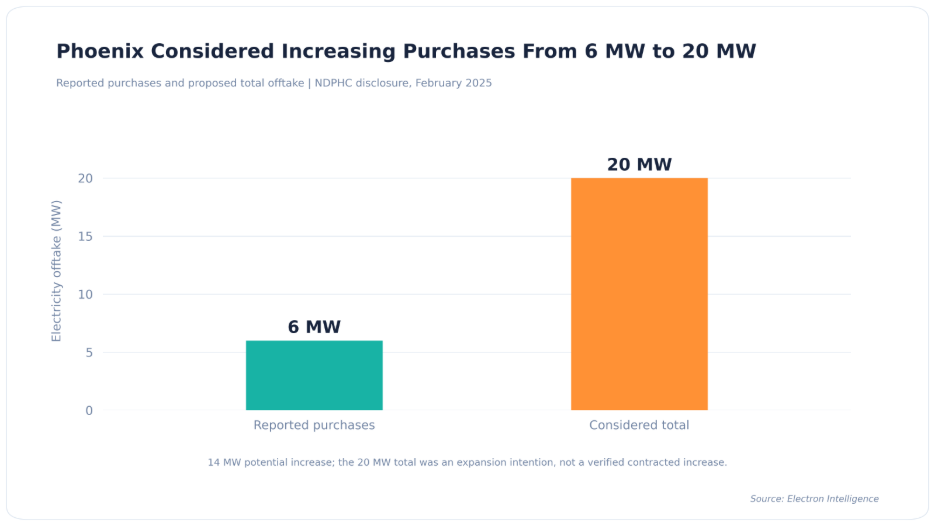
Figure 1: Phoenix’s proposed total implies 14 MW of additional purchases, subject to confirmation of its expansion commitment.
Additional purchases can also emerge without factory expansion. In Agbara, Strongpack reaffirmed its decision to connect to the grid during discussions of infrastructure works planned for 2026. It joins Sun Steel Industries, Nampak Bevcan, Flexipack, Lotus Plastics, JOF Salt and Khanz Group among the programme’s named beneficiaries. This creates a different demand proposition: improved electricity delivery could bring existing industrial consumption onto the grid, while Phoenix’s expansion could increase purchases from an already connected user.
Both routes make customer connections and local network capacity commercially relevant alongside upstream expansion. Higher offtake could support reinforcement where a capacity constraint is established, while new grid customers could support dedicated connection works. The investment opportunity becomes clearer when those requirements are linked to specific assets outside the funded programme and customer commitments towards their cost.
Line reinforcement and customer connections could complement public expansion
Industrial demand creates potential investment requirements at two points in the network: the shared lines supplying a cluster and the connections reaching individual factories. Public substation expansion provides additional transformation capacity, while local reinforcement determines how that capacity can serve higher purchases and new grid customers.
JICA’s preparatory study gives this relationship a specific engineering basis around Ogijo. Its historical demand scenarios identified overloads and recommended a combination of line upgrades, capacitor banks and additional transformation. The findings indicate that serving higher demand could require several connected interventions, rather than transformer additions alone.
One recommendation was to replace conductors along 13 kilometres of the Ikorodu–Odogunyan line to increase its capacity, at a historical estimated cost of US$2.5 million. The study also recommended a capacitor bank at Likosi to relieve loading on the Ikorodu–Shagamu line. These works provide identifiable reinforcement leads around the network serving Ogijo’s industrial customers. Their present necessity and coverage within subsequent public packages remain to be established.
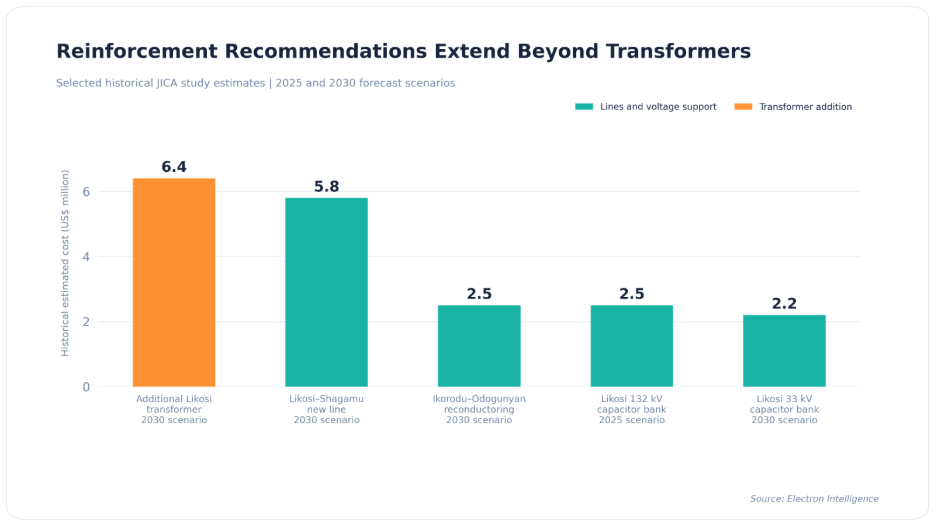
Figure 2: Historical reinforcement recommendations combine transformer additions, line upgrades and voltage support.
Agbara combines public transmission infrastructure with privately delivered distribution works. The Ikeja West–Agbara 132 kV line and FGN Power Company’s mobile transformers support bulk supply. Mirllwater reported deploying distribution transformers, ring main units and connecting lines, while NDPHC assigned customer reticulation to contractors working with Millwater. Dedicated factory equipment and its funding remain separately unconfirmed. Further investment depends on identifying additional transmission, distribution or customer equipment beyond the works already provided or assigned.
The potential opportunity therefore lies in defined works serving identifiable demand. Shared reinforcement could support several industrial users, while dedicated connections could serve individual customers. Where those requirements extend beyond funded public works, they provide a basis for structuring complementary investment around the users who benefit.
Customer payments could support dedicated connections and shared reinforcement
Complementary investment around industrial demand can involve shared transmission reinforcement, distribution feeders or equipment dedicated to a factory. These assets serve different functions and have different ownership arrangements. Their classification determines which customer, supplier or network institution could support capital recovery.
Sango–Ota provides a historical proposal for a dedicated high-voltage connection. Adefolorunsho Technical Ventures Limited (ATVL)’ 2020 environmental assessment proposed a 132/33 kV substation serving its factory, with financing sought from North South Power. It also reported a signed power purchase agreement. The proposal links an identified customer, connection asset and prospective financier, although asset ownership, loan disbursement and repayment terms remain unverified. It illustrates a possible supplier-financed connection rather than an established payment mechanism for shared transmission.
Agbara presents a broader financing partnership across several asset types. In 2023, NDPHC’s managing director identified EnerixOne as a financial partner for transmission expansion, substations and distribution lines, with industrial customer payments intended to support the business. This suggests an approach combining electricity supply with infrastructure investment. However, the programme’s mixed scope means that its private participation cannot be attributed entirely to transmission, while the disclosed partnership does not establish asset-specific repayment rights. These payment arrangements determine which additional assets could advance from identified requirements to financeable projects.
Agbara leads on delivery evidence, while Ogijo offers more specific reinforcement candidates
Agbara provides the strongest evidence of programme activity around industrial supply, while Ogijo offers more specific engineering leads for additional investment. Sango–Ota adds a historical financing proposal. Their relative readiness depends on how far delivery, customer requirements and payment arrangements have developed together.
TCN ’s commissioned 125 MVA transformer and NDPHC’s customer-supply transformer contract mark delivery progress at Agbara. Strongpack’s connection intention adds prospective demand, while EnerixOne’s financing partnership indicates private involvement without confirming funding for either transformer. Phoenix’s proposed increase from 6 MW to 20 MW offers 14 MW of potential additional purchases, but remains unlinked to a defined additional asset or infrastructure payment commitment.
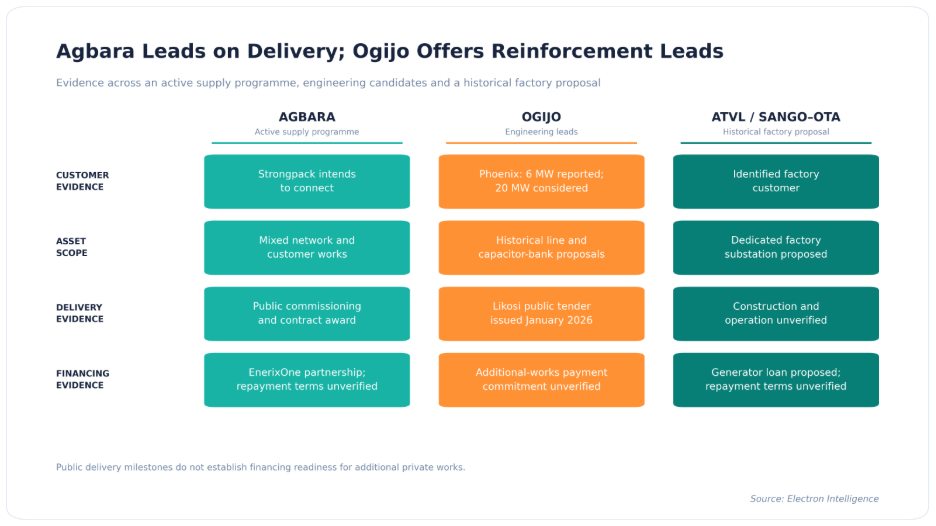
Figure 3: Selected assets have reached different documented delivery stages, while private financing arrangements remain at partnership or proposal stage.
The ordering changes when the focus shifts to specific assets. JICA’s historical recommendations identify line reinforcement and voltage-support equipment around Ogijo, while Agbara’s private partnership leaves financing unallocated to individual assets. ATVL’s dedicated factory substation and proposed generator loan provide a clearer customer-to-asset link, although delivery and repayment remain unverified. Ogijo and ATVL therefore offer specific development leads, while Agbara provides stronger delivery evidence.
Agbara consequently offers the strongest starting point for tracing remaining works within an active supply programme. Ogijo offers identifiable reinforcement candidates whose current necessity and funding position require confirmation, while ATVL provides a historical financing reference. These are different levels of project development evidence. Financing readiness would emerge where a current additional asset requirement is matched to an agreed payer and repayment arrangement.
What We’re Watching
JICA’s final package scope and contract awards will clarify which works public funding covers. Current load-flow and connection studies will show whether factories need additional assets beyond that scope. Necessary works outside funded packages would strengthen the private investment case; inclusion in public contracts or sufficient existing capacity would narrow it.
Phoenix’s regulatory ruling and contracted MW will show whether its proposed increase from 6 MW to 20 MW becomes a firm supply commitment. A signed increase would strengthen the demand case, while a lower contracted volume would reduce the expansion requirement. Its connection study will establish whether that demand depends on additional infrastructure.
Strongpack’s energisation and executed supply agreement will show whether its connection intention translates into grid supply. Disclosed customer contributions or repayment commitments would establish a link to infrastructure financing. A connection delivered entirely through existing funded works would confirm supply progress without establishing an additional investment requirement.
Bottom Line
Lagos–Ogun provides a concrete starting point for complementary infrastructure investment: funded public expansion, established industrial electricity purchases and identifiable connection and reinforcement leads. Agbara has the strongest delivery activity, while Ogijo offers specific engineering candidates and a quantified customer expansion signal.
The commercial opportunity becomes clearer where customers require additional assets beyond public programmes and commit to payments supporting their cost. Current asset requirements, funding boundaries and repayment arrangements remain unresolved across the reviewed cases. The next opportunity is to turn these identifiable leads into financeable projects by confirming the additional assets required and agreeing how their costs will be recovered.