Revenue Recovery and Private Capital in Southern Africa’s Interconnector Pipeline
Southern Africa’s interconnectors could expand regional electricity trade, with private investment depending on coordinated infrastructure delivery and dependable payment arrangements.
Cross-border transmission is the constraint that turns regional power trade from a market opportunity into an infrastructure problem. New interconnectors expand access to suppliers and buyers only when the full route, including domestic lines, substations and trading arrangements, can carry and settle the power.
SAPP gives those assets a commercial setting: an operating regional market where network limits already block matched bids. The investment question is therefore not whether transmission matters, but which projects convert existing and future trading demand into bankable infrastructure revenue.
This deep dive assesses how selected interconnectors change regional trade access, where private capital can enter the development and financing stack, and which payment structures determine whether the infrastructure earns predictable returns.
Executive Summary
- Southern Africa’s trading restrictions create a commercial case for transmission investment. Existing bottlenecks block matched trades in SAPP, turning network capacity into a revenue-relevant constraint rather than a technical afterthought.
- Interconnectors serve distinct markets and risks. Zambia–Tanzania links two power pools; Kalumbila–Kolwezi targets Copperbelt demand. In both cases, usable capacity depends on the weakest segment of the full route, not the cross-border line alone.
- Private capital enters where development rights, ownership and payment commitments are clear. Kalumbila–Kolwezi shows how an original developer, equity investors and debt arrangers can divide roles as a project moves from origination toward financing.
- Revenue risk sits in agreements, not engineering alone. Coordinated delivery determines when a route becomes usable; payment terms determine whether lower flows reduce the infrastructure owner’s return.
Transmission bottlenecks limit the commercial reach of Southern Africa’s electricity market
SAPP’s trading activity establishes demand for cross-border capacity. Buyers and sellers already submit trades that the network cannot carry, so new transmission is not speculative market creation; it is a response to constrained demand.
The restrictions affect the routes through which that market operates. SAPP identifies bottlenecks along the central corridor, including the Botswana–Zimbabwe and Zimbabwe–Zambia interconnectors. When these routes lack sufficient capacity, electricity trades cannot proceed even where buyers and sellers have submitted matching offers.
A restricted link limits more than the border it crosses; it narrows the trading corridor for every buyer and seller relying on that route.
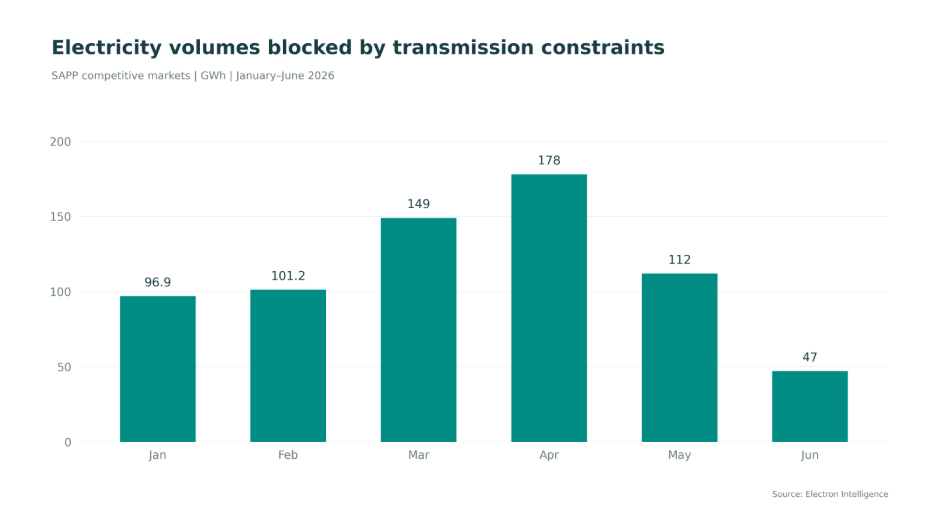
Figure 1: Electricity volumes blocked by transmission constraints in SAPP’s competitive markets, January–June 2026.
The comparable monthly figures verified for this analysis run through June. June recorded fewer potential exchanges than April and a smaller proportion blocked, but completed trade also declined. The lower blocked share therefore shows that the network accommodated a larger proportion of a smaller trading volume, rather than demonstrating an increase in its ability to carry electricity. These figures alone cannot establish whether transmission constraints eased. SAPP’s August update continued to identify central-corridor bottlenecks, reporting that 33% of matched bids could not be traded.
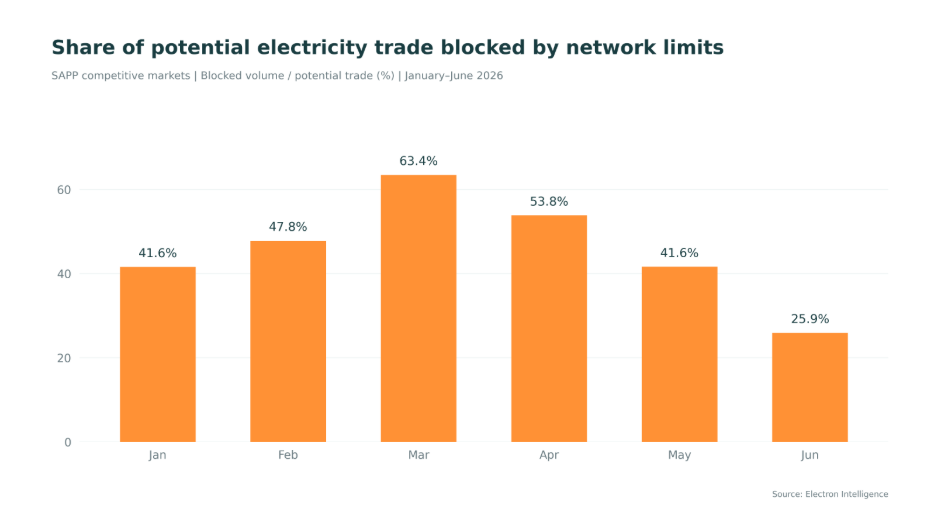
Figure 2: Share of potential electricity trade blocked by transmission constraints, January–June 2026.
The restrictions establish a clear need for network capacity, but not every interconnector solves the same problem. Projects that reinforce constrained sections or bypass them relieve existing bottlenecks. Projects that mainly connect new markets expand access without necessarily reducing central-corridor congestion. The investment case turns on route-level deliverability, not headline megawatts or line length.
New interconnectors widen market access only when the complete route is bankable and usable
Southern Africa’s interconnector pipeline expands the market in two ways: it links additional power systems and adds routes within the existing network. The project scopes differ materially. Zambia–Tanzania includes major domestic reinforcement, ZIZABONA combines several linked components, and Mozambique–Malawi includes the connecting line and terminal substation works. Cost comparisons therefore compare packages, not like-for-like transmission lines.
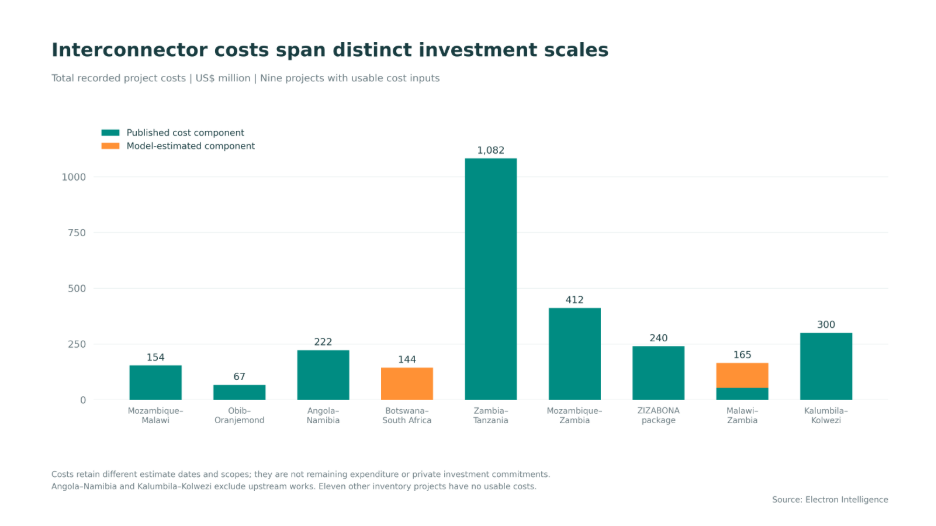
Figure 3. Published and estimated investment costs across nine Southern African interconnector projects.
Project scope determines both the investment captured in the budget and the execution risk left outside it. Angola–Namibia excludes separately developed upstream infrastructure in Angola; Kalumbila–Kolwezi relies on the networks feeding the proposed connection. A low project cost can therefore signal a narrow asset perimeter rather than a lower total system requirement. For investors, the relevant exposure is the interface between the financed asset and the works controlled by others.
The Zambia–Tanzania interconnector links the Southern African and Eastern African power pools. That connection creates a trading route between two regional markets rather than simply adding a bilateral line. Because the programme includes reinforcement in northern Zambia, the project also shows that cross-border trade depends on domestic network depth as much as the interconnector itself.
Kalumbila–Kolwezi targets a different opportunity: access to the DRC Copperbelt’s concentrated electricity demand. For buyers, the line broadens supply options through Zambia; for sellers, it opens a route to industrial demand beyond their domestic markets. The constraint is not demand visibility, but whether generation and upstream network capacity can feed the line reliably.
The two projects therefore do different commercial work. Zambia–Tanzania extends the market boundary; Kalumbila–Kolwezi deepens access to a specific demand centre. Neither should be treated as automatic relief for SAPP’s central-corridor bottlenecks. Relief requires either reinforcement of the constrained sections or an alternative route around them. The bankable asset is the delivered trading path, not the isolated line.
Cross-border transmission requires national approvals and coordinated project agreements
Cross-border transmission requires more than permission to build. Each country controls its own electricity laws and regulatory approvals, while SAPP governs regional operation and exchange. Bankability therefore depends on agreements that allocate construction duties, operating responsibilities, access rights and use of the asset for cross-border trade.
The Mozambique–Malawi interconnector illustrates this approach. A memorandum between the governments established the project’s objectives. Separate agreements addressed implementation, maintenance, system operation, wheeling and electricity purchases. These arrangements connected the responsibilities of Electricidade de Moçambique and the Electricity Supply Corporation of Malawi. The electricity purchase agreement established the supply relationship; the accompanying agreements addressed how the connection would be delivered, maintained and used to carry that electricity.
Cross-border coordination also sets the commercial clock. A finished section on one side of the border cannot earn its full trading value if the connecting section or supporting network is delayed. Financing, construction and operating agreements therefore determine when the complete route becomes serviceable.
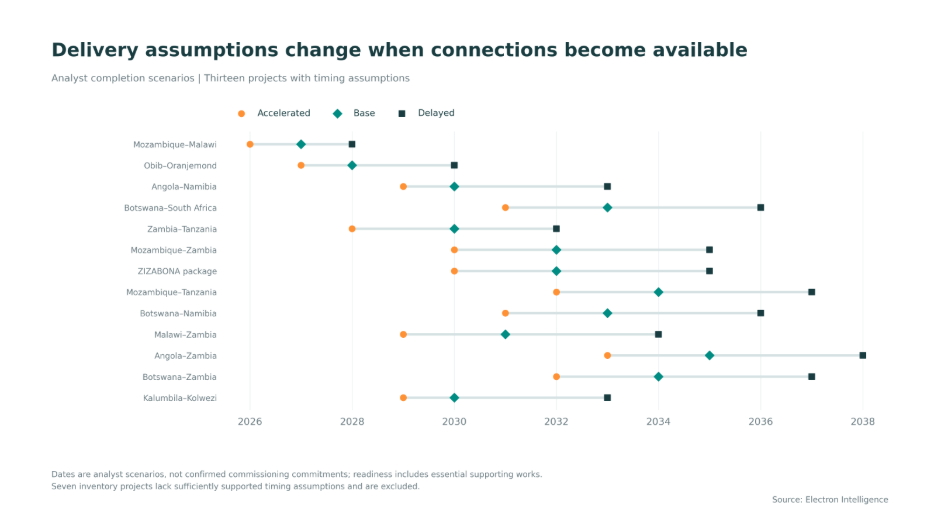
Figure 4. Illustrative completion years for interconnector projects under delayed, base and accelerated delivery scenarios.
The delivery scenarios vary when construction begins, how long the remaining works take and when essential connecting infrastructure becomes available. The base case uses assumptions informed by each project’s verified progress. The delayed case allows for later starts and longer delivery periods, while the accelerated case assumes earlier starts and faster completion where feasible. In every case, a route becomes usable only once both the interconnector and its required supporting works are ready.
These timing differences affect the scale of infrastructure available to support regional trade. Among projects with usable cost figures, the base case places approximately US$1.83 billion of project investment in service by 2030, compared with US$221 million under delayed delivery. The scenarios converge substantially by 2035, indicating that slower progress postpones delivery within the modelled portfolio. These values represent the full costs of the included projects, rather than expenditure still required or private financing commitments.
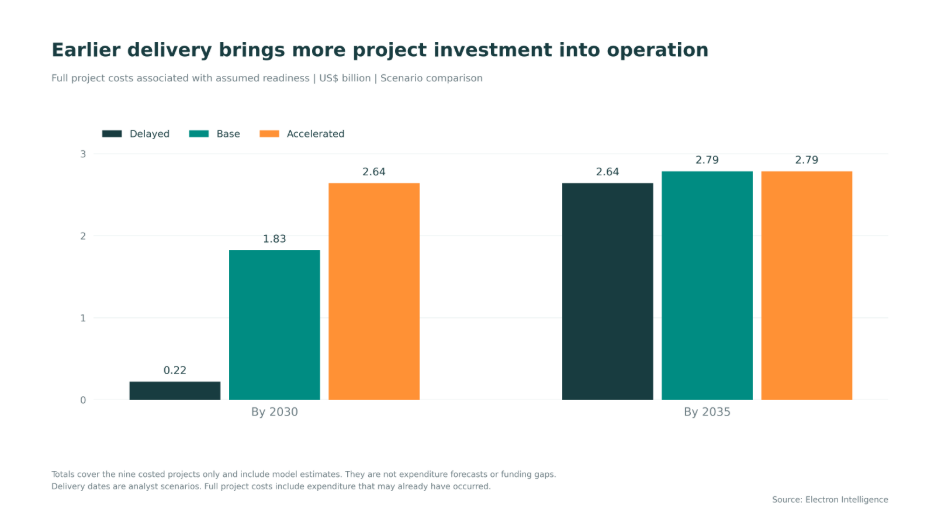
Figure 5. Total project costs associated with interconnectors assumed operational by 2030 and 2035.
Coordination has direct commercial value. It determines when the connection can provide service and when the investment can start earning revenue. For private participants, the agreements define the asset perimeter, assumed obligations and dependencies retained by governments and national utilities.
Private capital can support interconnectors from project development through ownership and financing
Private participation starts before financial close. Developers fund studies, permissions and negotiations that convert a corridor concept into an investable project. Later-stage shareholders and lenders then price construction risk, political coordination and revenue commitments. Development work is therefore not ancillary; it creates the conditions under which institutional capital can enter.
Kalumbila–Kolwezi illustrates this progression. Gridworks has signed agreements to become lead equity investor and majority shareholder, alongside the DRC’s strategic investment fund, FIS-RDC. EnPower, the original developer, retains a minority stake, while Trafigura is arranging debt financing. The announced structure identifies the capital roles but not final financing certainty; until close, the relevant conclusion is that the project has moved from development sponsorship toward an investor-led financing structure.
The investment proposition changes as the project matures. Early capital buys development rights and options; later capital underwrites construction obligations, counterparty commitments and payment security. Public and private institutions can sit in the same project, but they do not carry the same exposure. The decisive question is how ownership, financing and payment agreements allocate risk across the route.
Payment commitments determine how cross-border transmission investment is recovered
Ownership identifies who supplies capital; transmission agreements determine how that capital is recovered. The key variables are the payer, the charging basis and the allocation of volume risk. Regional trade creates the rationale, but payment commitments create the revenue available to cover operating costs, service debt and compensate equity.
The payment structure determines who absorbs lower utilisation. Energy-based charges expose revenue to generation availability, buyer demand and constraints elsewhere on the route. Capacity reservations protect revenue when customers use less than their reserved entitlement. Availability payments shift the focus to whether the asset remains capable of providing contracted service. This distinction matters when a functioning interconnector carries less power because an adjoining network is constrained: the contract decides whether the infrastructure owner or the user absorbs the loss.
Kalumbila–Kolwezi provides a concrete test case. Gridworks describes mining offtake as an anchor for the project, linking the proposed line to identifiable industrial demand. The announcement does not disclose the transmission tariff, contract duration, payment security or interruption regime. Demand visibility strengthens the commercial foundation, but the revenue case rests on the agreement that converts that demand into enforceable project receipts.
What we are watching
Kalumbila–Kolwezi’s financial close will show whether the announced investor roles become committed equity and debt. Disclosure of its payment agreements would clarify how mining offtake supports transmission revenue, including contract duration, payment security and responsibility for interruptions.
Development mandates, concessions and investor procurements for other interconnectors will show whether private participation is extending beyond Kalumbila–Kolwezi. These arrangements should identify which assets private participants may develop or own and which responsibilities remain with national utilities.
SAPP’s final transmission pricing framework will clarify how regional network charges are allocated and settled. Contract awards for Angola–Namibia’s connecting works will also test whether the supporting infrastructure needed for that route is moving from planning into delivery.
Bottom Line
Southern Africa’s interconnector pipeline gives private capital a route into regional electricity trade, but the investable opportunity is narrower than the headline need for transmission. Connections between power pools widen market access; lines into demand centres such as the Copperbelt deepen access within the existing network. In each case, the commercial asset is the completed route, including the domestic infrastructure and agreements that allow power to move.
Private participation spans project preparation, development rights, equity ownership and debt arrangement. Kalumbila–Kolwezi shows how those roles can combine in one project, but it also shows why announced participation is not the same as bankability. The decisive evidence is financial close and the payment structure behind it.
The opportunity rests on converting trading value into enforceable infrastructure income. Payment commitments decide how expenditure is recovered and who bears the risk when electricity flows fall short. Coordinated delivery and credible revenue arrangements are therefore the conditions for private capital to scale in Southern Africa’s regional transmission network.