The Demand Foundations for Private Transmission: What South Africa and Kenya’s Economic Corridors Reveal
South Africa and Kenya are opening transmission infrastructure to private capital. This deep dive examines how economic clusters could strengthen corridor demand, while showing that bankability still depends on converting that demand into credible payment commitments.
Africa’s emerging private-transmission market is creating new routes for private capital to develop, finance and operate network infrastructure. Our previous analysis identified a US$3.56 billion pipeline and examined how project rights, contracted revenue and payment protection shape the entry points available to capital. It left a preceding question unresolved: what gives an individual transmission corridor a sufficiently strong economic basis for development?
South Africa and Kenya already provide early evidence. The corridors in their transmission plans connect renewable-generation zones with mining regions, ports, industrial centres, agricultural economies and growing cities. However, the scale, maturity and concentration of these activities differ across the corridors. This analysis examines whether those activities could provide the demand foundation for private transmission and what would be required to convert that demand into a route for capital recovery.
Executive Summary
South Africa and Kenya are introducing private participation into transmission corridors selected through public network planning. The projects pass through productive economic areas, but the mines, ports, industries and processors surrounding them are not publicly identified as contractual anchors for the transmission investment.
The corridors point to three potential demand structures. Mining regions could support one large user, or an industrial club, port and processing clusters could aggregate several users, while new economic zones could coordinate transmission development with future industrial demand.
MOTRACO shows how the model can move from economic proximity to capital recovery. Mozal’s initial 425 MW electricity requirement shaped a US$93 million transmission investment, later reinforced to provide 850 MW. Transmission tolls were intended to cover debt amortisation, financing expenses and operating costs.
The reviewed corridors are not yet proven industry-backed projects. They identify where developers can test actual load, network dependence and willingness to make long-term commitments. Planned but unassigned routes such as Voi–Taveta and Sotik–Kilgoris provide opportunities to investigate this model before a complete project structure has been established.
Private delivery has entered transmission planning, but economic demand remains outside the project structure
South Africa and Kenya are introducing private participation into projects first identified through public network planning. South Africa’s initial Independent Transmission Projects programme covers 1,164 kilometres of 400 kilovolt lines selected from the country’s wider transmission plan. Kenya’s signed public-private partnership covers the Loosuk–Lessos and Kibos–Kakamega–Musaga corridors, which were identified to strengthen the national network and improve regional supply.
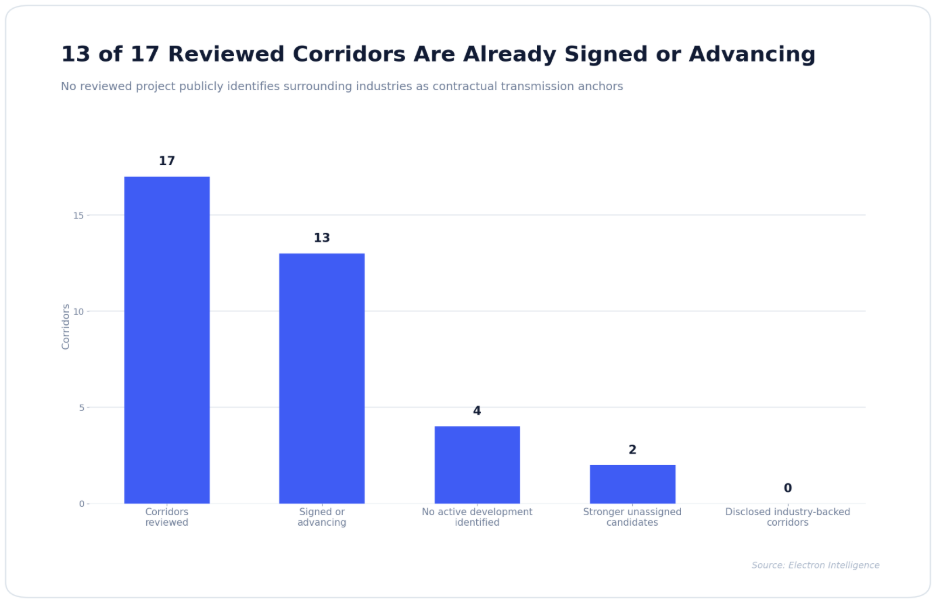
Figure 1: Private delivery has advanced without industrial demand entering the structure
The projects establish routes for private delivery, but they remain system-led. Public institutions determine the network requirement, select the corridor and organise procurement. The mines, industries, ports, processors and commercial centres surrounding the lines are not publicly identified as contractual anchors, even where their electricity use may contribute to the need for additional capacity.
This separates the economic reason for the infrastructure from the structure through which it is developed. Project documents explain where a line will be built and the network function it will perform but reveal less about which economic users will rely on the additional capacity. The corridor locations nevertheless make those potential users visible and create a basis for investigating whether their demand could play a more direct role in future projects.
Identifiable users and network constraints determine whether economic activity can support transmission
The economic activity surrounding a planned corridor gives developers a clearer starting point than a national transmission deficit. It identifies where electricity is being used productively, which users may require additional capacity and how demand could develop over the life of the asset. The opportunity is strongest where a proposed line connects an established economic base rather than depending entirely on industries that have not yet been built.
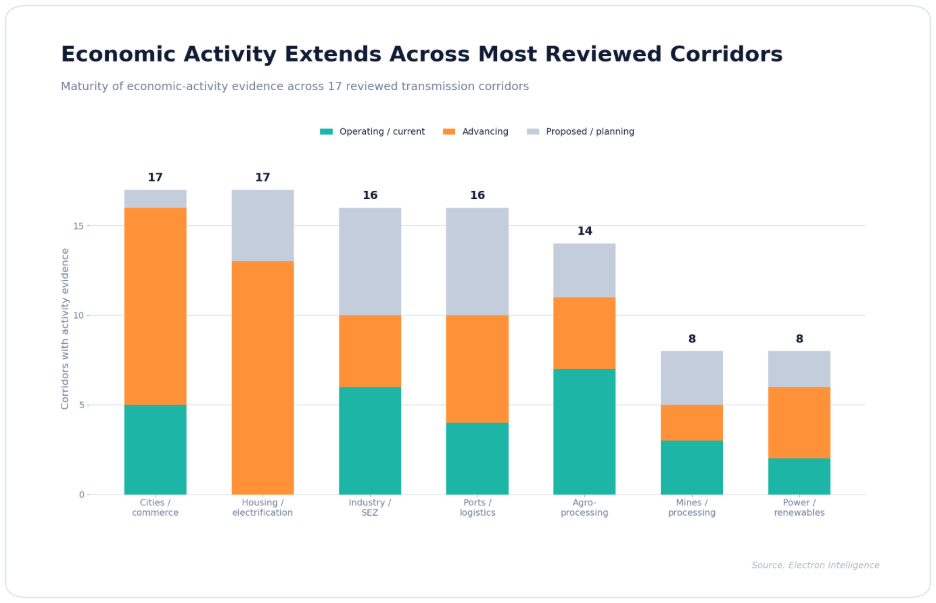
Figure 2: Economic activity is broad, but its structure differs
Economic proximity alone is insufficient, as many surrounding businesses already receive grid electricity. The corridor case therefore depends on who would benefit from the additional capacity and whether the existing network limits their supply, reliability or future growth.
This pattern appears in different forms. Boundary–Ferrum is located within a region containing a concentrated group of electricity-intensive mining operations. Kipevu–Mbaraki is planned as a local network reinforcement in an area containing port, oil-terminal, industrial and commercial users. Public evidence does not establish which of these users would draw capacity from the new line, depend on it or contribute to its payment.
Nama–Gromis combines an existing regional economy with proposed port and industrial development around Boegoebaai. Whether these projects create additional transmission demand will depend on their final electricity-supply and grid-connection arrangements.
An industry demand-driven model begins when these electricity requirements influence a project’s capacity and commercial structure. One large user may provide the principal demand commitment, while a port or processing cluster may require several users to aggregate their demand. Their participation can help establish how much capacity is needed, when it is required and how long the demand is expected to remain. Future industries become relevant only when their projects and electricity requirements are sufficiently committed.
The reviewed corridors have not yet demonstrated this complete structure. Their surrounding industries are potential anchors rather than disclosed contractual counterparties. They instead identify where developers can investigate constrained load, dependence on new capacity and willingness to make long-term commitments.
MOTRACO shows how an industrial customer can support transmission capacity and capital recovery
MOTRACO shows how a defined industrial requirement can provide the foundation for transmission investment. Its development followed the establishment of the Mozal aluminium smelter in Mozambique. After an electricity tariff for Mozal was agreed in 1997, neither Eskom nor Electricidade de Moçambique could deliver the required supply through the available arrangements. The electricity companies of Mozambique, South Africa and Eswatini subsequently created MOTRACO as a special-purpose transmission company in 1998 to provide the connection.
The electricity requirement was visible before construction. MOTRACO developed two 400 kilovolt lines connecting the South African network to Eswatini and Mozambique. The initial US$93 million investment supported 425 MW of supply to Mozal. When the smelter expanded, the network was reinforced to increase available capacity to 850 MW. Transmission capacity therefore developed alongside measurable industrial demand rather than an expectation that demand would emerge after construction.
Mozal’s requirement was also incorporated into the commercial structure. The smelter sourced electricity under an agreement with MOTRACO, while the transmission company earned revenue from transmission tolls. Electricity payments from Mozal offset the cost of purchasing that power, while the transmission charges were intended to cover loan amortisation, financing expenses and operating costs. The arrangement provided an identified route through which the anchor’s demand could support recovery of the transmission investment, although the detailed tariff, payment protections and returns are not publicly disclosed.
The structure operated for more than two decades and extended beyond the original anchor. MOTRACO also transported electricity to the national electricity companies of Mozambique and Eswatini. The model combined a large customer capable of establishing the initial capacity requirement with additional users that broadened the transmission asset’s economic role.
Transmission revenue can be supported by the system, industrial users or both
MOTRACO shows how productive demand can enter both the design and commercial structure of a transmission project. Mozal’s electricity requirement influenced the capacity developed, while transmission tolls provided a route for covering the asset’s financing and operating costs. The industrial user was therefore connected to both the need for the infrastructure and the revenue supporting it.
Kenya’s signed transmission PPP provides an alternative. Its revenue is based on an availability payment supported through the electricity system rather than on the demand of a named industrial user. The project can therefore serve a wider network requirement without requiring one mine, port or processor to purchase a defined share of its capacity. The structure has been agreed, although its financing and payment performance have not yet been demonstrated.
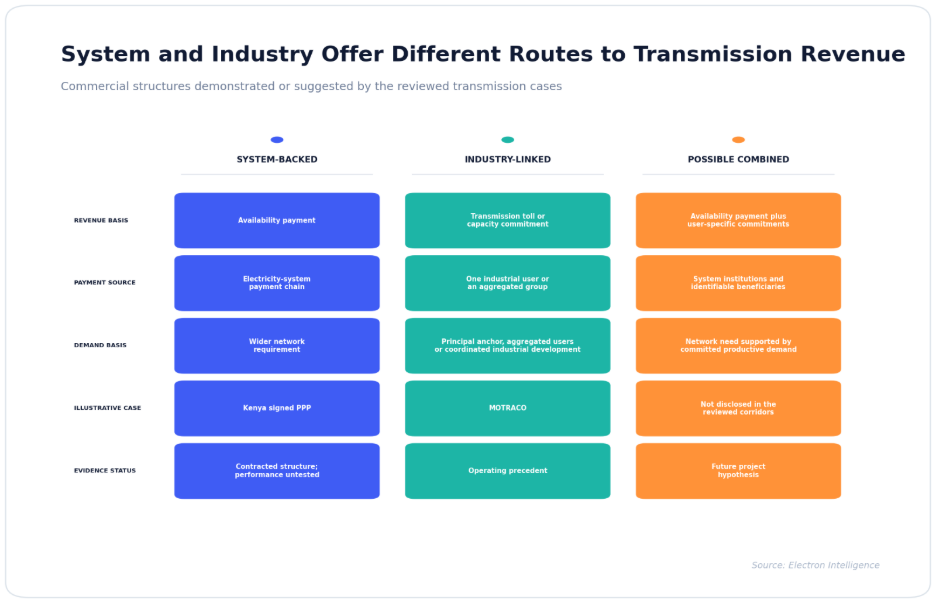
Figure 3: Private transmission revenue can be supported by system-backed payments, industry-linked commitments or a combination of both.
Where productive demand plays a more direct role, the corridor evidence suggests three ways it could be organised. A large industrial user could provide the principal commitment, several users in a port or processing area could aggregate their requirements, or transmission development could be coordinated with a new industrial zone. These structures differ in how demand is established and how widely payment exposure is shared.
The economic activity around the reviewed corridors provides places to investigate these structures, but not evidence that they already exist. Mining regions offer concentrated users whose load and network dependence can be tested. Port and industrial clusters provide possible aggregated demand, while future economic zones could coordinate their electricity requirements with network development. In each case, the users become commercially relevant only when their need for additional capacity and willingness to make long-term commitments are established.
The two revenue approaches need not be mutually exclusive. A system-backed availability payment could support the wider network service, while industrial users contribute through connection payments, capacity reservations or other commitments linked to the additional infrastructure they require. The appropriate structure would depend on whether the project primarily serves a system need, identifiable industrial demand or a combination of both.
Unassigned Kenyan corridors show where industry-led project origination could begin
The strongest near-term application of an industry demand-driven model may sit outside the projects already moving through procurement. South Africa’s identified corridors have entered its Independent Transmission Projects programme, while Kenya’s transmission plan contains routes for which no active procurement or development process was identified in the public evidence reviewed. These corridors provide an earlier entry point at which economic demand could help shape the project before its technical and commercial structure is fixed.
Four Kenyan planning candidates fall into this group, but their economic foundations are not equally strong. Voi–Taveta and Sotik–Kilgoris stand out because existing productive activity is visible around both routes. The other candidates depend more heavily on dispersed agriculture, smaller towns, electrification and proposed industrial activity. This does not remove their network value, but it provides a less concentrated starting point for an industry-backed transmission structure.
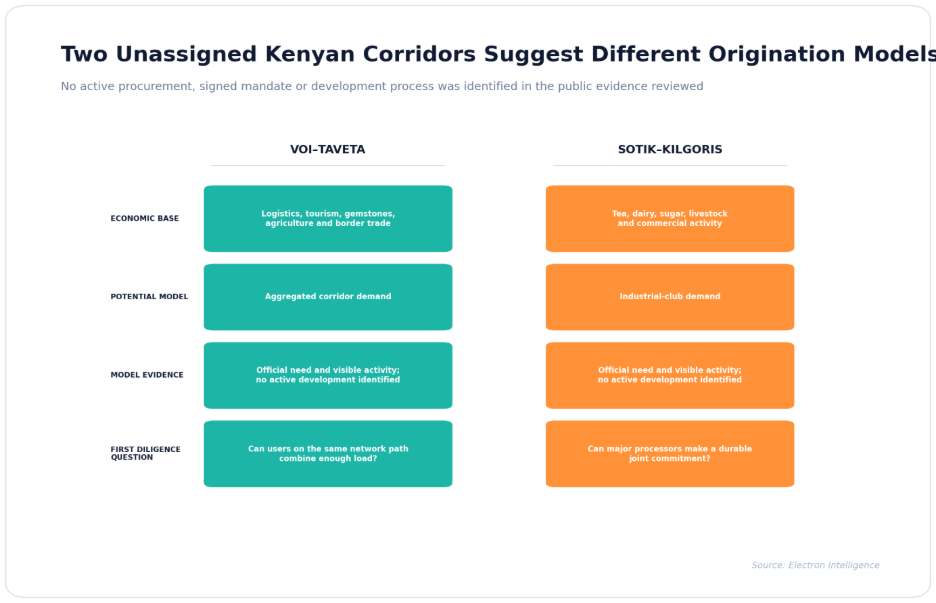
Figure 4: The two unassigned Kenyan corridors offer different origination cases
The economic case around Voi–Taveta is distributed across logistics, border trade, tourism, agriculture and gemstone activity. Voi connects the Standard Gauge Railway and the Nairobi–Mombasa highway, while Taveta links Kenya with the Tanzanian border economy and surrounding agricultural production. No single user currently provides an obvious anchor of Mozal’s scale. The opportunity would therefore depend on establishing whether the combined electricity requirements of logistics facilities, processors, mines and commercial users create enough demand along the same network path to support a coordinated commitment.
Sotik–Kilgoris provides a defined industrial base for investigating an aggregated-demand structure. Potential participants include Sotik Tea’s Arroket and Mettarora factories, Evergreen Tea Factory, New KCC’s Sotik dairy plant and Transmara Sugar. However, their existing and incremental electricity demand is not publicly disclosed, while Transmara Sugar also generates electricity for its operations.
These facilities could support an industrial-club structure if their combined demand and willingness to make coordinated capacity commitments are established. No such joint arrangement has yet been publicly disclosed.
Neither corridor can yet be described as an investable private-transmission project. Inclusion in a transmission plan does not confirm that development rights are available, and nearby economic activity does not establish corridor-level load. Their significance is that private project origination could begin with identifiable users rather than a general network deficit. Load studies could establish how much electricity the activities require, network analysis could determine whether the proposed corridor is necessary to serve them, and commercial engagement could establish whether the users are willing to support a long-term capacity arrangement.
These cases extend the industry demand-driven model beyond projects already selected by public institutions. Instead of waiting for a fully defined transmission asset to enter procurement, private developers could help establish the relationship between economic demand and network investment at an earlier stage. The opportunity is therefore not simply to finance an unassigned line. It is to convert a planned corridor, a group of productive users and an identified network requirement into a project with measurable capacity needs and a credible route to capital recovery.
What We’re Watching
The first signal will be whether industrial users move from being nearby beneficiaries to active participants in transmission development. Capacity reservations, user contributions, joint-development agreements or long-term transmission commitments would show that economic demand is entering the project structure rather than remaining outside it.
South Africa’s final request for proposals for the first Independent Transmission Projects will provide the next defined test. Its commercial terms will show whether the initial projects remain entirely system-backed or create any role for large users and economic clusters in establishing capacity requirements or supporting project revenue.
In Kenya, the next signal will be whether planned but unassigned corridors enter feasibility studies, receive development mandates or move towards procurement. Progress around Voi–Taveta or Sotik–Kilgoris would show whether identifiable logistics, processing and commercial activity can help originate new transmission projects before the public sector defines the complete transaction.
Bottom Line
South Africa and Kenya’s planned corridors show that private transmission can be developed around productive economic areas rather than national network deficits alone. Mining districts provide concentrated potential anchors, while ports, industrial zones and processing regions create opportunities to aggregate demand across several users. These activities identify where an industry demand-driven model could be investigated, but they do not yet provide contracted revenue.
MOTRACO shows how the model becomes commercially relevant: a measurable industrial electricity requirement shapes network capacity and enters the transmission company’s payment structure. The opportunity across the reviewed corridors is therefore not simply to finance planned lines. It is to convert identifiable economic demand into durable commitments capable of supporting transmission capital recovery.