Three Russia "deals" in 2 days.
Kremlin courts Ethiopia, Niger, and Sudan’s leadership on nuclear power at the World Atomic Week held in Moscow
Hey, Joseph Ibeh here. I decided to try a new format this week. I love to hear your thoughts and comments, so please don’t hesitate to share them on Substack or reach out to me on LinkedIn.
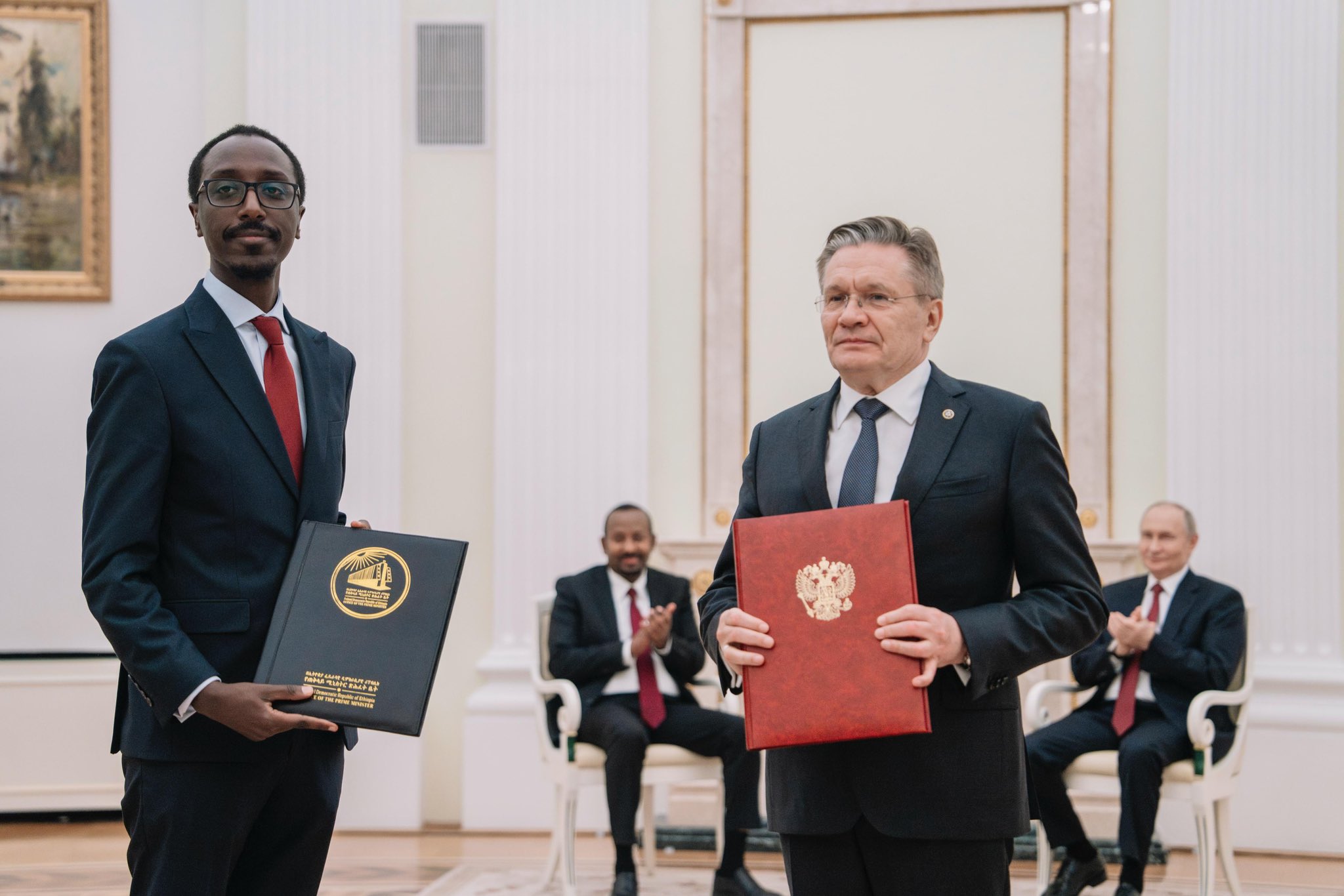
In a single week, Moscow transformed World Atomic Week (WAW 2025) - a nuclear-industry showcase - into a diplomatic sprint across Africa’s energy map. The Kremlin positioned WAW 2025 as a platform to promote new nuclear financing models, linking technological offers to state diplomacy. Peaceful nuclear technologies are “the basis for international cooperation and bringing states closer together,” in President Vladimir Putin’s words. Here is a snapshot of what actually happened (an energy investor’s perspective).
Ethiopia: Rosatom and Ethiopian Electric Power signed an action plan in Moscow (Sept 25, 2025) to develop a roadmap, feasibility path, and an intergovernmental agreement (IGA), alongside workforce training. This is pre-FEED / pre-IGA; no reactor model, site, cost, or financing terms disclosed yet.
Niger: At the same forum, Niger’s mining minister stated intent to build two 2,000-MW reactors with Rosatom and to co-develop uranium reserves. This is a policy signal, not a binding contract; technical, regulatory, and financing specifics are undeclared.
Sudan: No nuclear project announcement. Moscow meetings focused on economic/trade cooperation, transport infrastructure, and broader political dialogue; any nuclear track would be post-conflict and contingent on governance and security improvements.
What is driving nuclear interests in Africa?
- Reliability & decarbonization: Drought-exposed hydro systems and gas price volatility leave baseload gaps; 90%+ capacity factors from nuclear are attractive for grids seeking firm supply to support industry and regional power trade. Ethiopia explicitly cited over-reliance on hydro.
- Industrial policy: The growth of heavy industry (cement, steel, fertilizers) and data centers requires 24/7 power, which necessitates nuclear power, transmission upgrades, and long-lived assets.
- Energy security & FX: Reducing diesel imports and stabilizing current accounts is a recurring policy goal, especially in Sahel and Horn markets.
Why Russia? Separate the signal from the noise
Financing (the main hook)
- Integrated, state-backed capital: Rosatom frequently couples EPC with export credit, sovereign loans, and long-term tenors. Where acceptable, they offer fuel take-back, lowering early capital expenditure hurdles for first-time buyers. Russia publicly emphasized “new financing models” at WAW 2025, consistent with its export playbook. For governments with limited access to OECD/EU vendor packages, this is often the only turnkey route.
- Reality check: No term sheets were released for Ethiopia or Niger. Until an intergovernmental agreement (IGA) or financing framework is disclosed, these are non-bankable signals and should be treated as strategic optionality, not near-term infrastructure plays.
Technology (perceived de-risking)
- Proven fleet & complete fuel-cycle services: Rosatom offers Gen III+ VVER (Water-Water Energetic Reactor) large reactors and a full suite of services (training, fuel supply, waste solutions), with reference builds abroad (e.g., Egypt’s 1,200 MW El Dabaa project). For newcomers, a single vendor covering EPC, fuel, and O&M training reduces interface risk.
- Reality check: Grid readiness (strong transmission, frequency control, reserves) and independent regulation are the gating items in Ethiopia/Niger, not reactor choice. Without regulator capacity and grid upgrades, timelines slip regardless of technology.
Nuclear deals extend Russia’s diplomatic and economic presence in Africa (energy, mining, logistics). Sudan’s Moscow outreach underscores the broader geo-economic track, even absent nuclear announcements.
Bottom line
- Signal: Russia used WAW 2025 to convert African nuclear interest into structured pipelines (Ethiopia action plan; Niger intent) and to deepen political channels (Sudan).
- Substance (today): Only Ethiopia has moved into a defined pre-project track, still years from FID. Niger is at the rhetorical stage; Sudan remains a non-starter until the country stabilizes.
- Why Russia: Egypt’s expected success with El Dabaa gives Rosatom credibility when courting other African governments, often cited in forums like World Atomic Week as a benchmark.
- Investment stance: Treat announcements as strategic optionality, not near-term infrastructure plays. The investable plays are grid/regulatory services, as well as skills programs, with a watchlist on financing disclosures and IGA execution through 2026.